If You’re Waiting for the “Discharged” Notification, You’re Already Late
Picture this scenario:
It’s Tuesday morning. You get a notification that a container has been Discharged at the terminal. You think, "Great, the clock has started. Time to get this moved."
You email your broker, ping your drayage dispatcher, check the terminal website, …
But then the roadblocks appear:
- The Broker: “Commercial Invoice had a typo. Customs hasn’t released it yet.”
- The Trucker: “I don’t have a driver available until Friday.”
- The Terminal: “No pickup appointment slots available for 48 hours.”
- The Warehouse: “We are full. We can’t take this until next week.”
By the time you solve these issues, the container has been sitting on the asphalt for 5 days. The free time clock has expired. You are now paying demurrage.This wasn’t a "port issue." This was a timing issue.
The “5 Days Before” Rule
In my experience analyzing thousands of shipments, I’ve found that 90% of demurrage isn’t caused by operational failures at the terminal. It is caused by gaps that occurred while the ship was still at sea.
If you start working on a container when it hits the ground, you have lost your buffer.The most successful import managers operate on what I call the "5 Days Before" Rule. They ensure the paperwork is done AND the logistics are lined up five days before the vessel ETA.
The 2 Silent Killers of Your Supply Chain
There are two categories of risks that eat up your free time. You need to solve both before arrival.
1. The Administrative Gap (The Paperwork)
These are the bureaucratic hurdles that stop the container from being "Available."
- The Missing ISF/ACI Filing: If this isn’t accepted days before arrival, you are guaranteed a customs hold.
- The Unpaid Freight Invoice: Carriers are strict. No money, no release. Wire transfers take time—don’t wait until discharge to initiate them.
- The Original Bill of Lading (OBL): If the OBL hasn’t been surrendered, that container is legally stuck.
2. The Execution Gap (The Logistics)
Even if your paperwork is perfect, you can’t move the box if the physical assets aren’t ready.
- The Terminal Appointment: In many major ports, you cannot enter without a booking. Appointment slots vanish quickly. If you wait until discharge to book, you might find the next open slot is after your Last Free Day.
- The Drayage Availability: Trucking capacity fluctuates. If you haven’t sent a Delivery Order (DO) to your trucker before the ship docks, you are gambling on them having a driver ready instantly.
- The Receiving Warehouse: This is often overlooked. Is your warehouse team ready to unload? Do they have space? If your warehouse says “Wait,” the container sits at the port collecting fees.
Visiwise: Your Supply Chain Time Machine
We built Visiwise to solve exactly this problem. We wanted to build a "Time Machine" for logistics managers—a way to see the risks before they become reality.
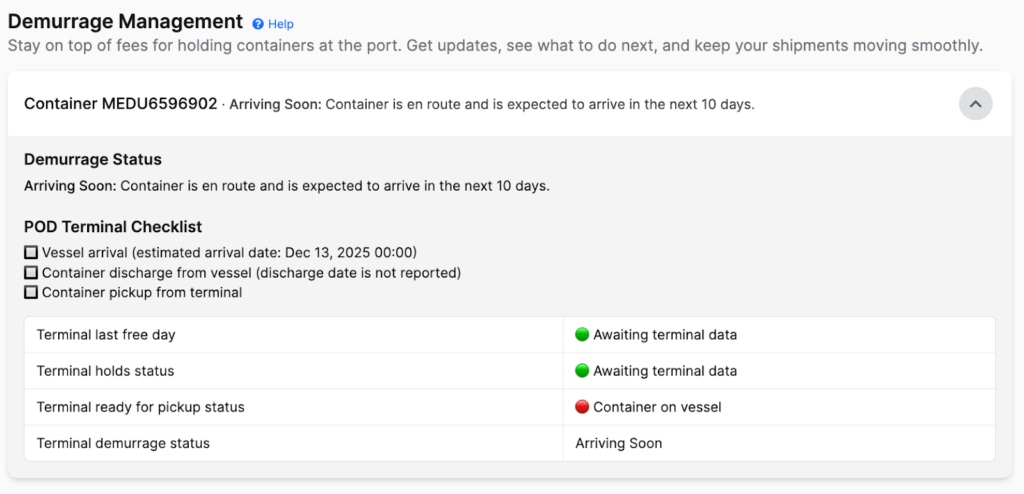
Instead of just telling you "Your container is here," Visiwise tells you "Your container arrives in 5 days or 10 days. Is your Customs Release secured? Is your trucker notified?"
Here is how we visualize that timeline:
Shifting from “Tracking” to “Readiness”
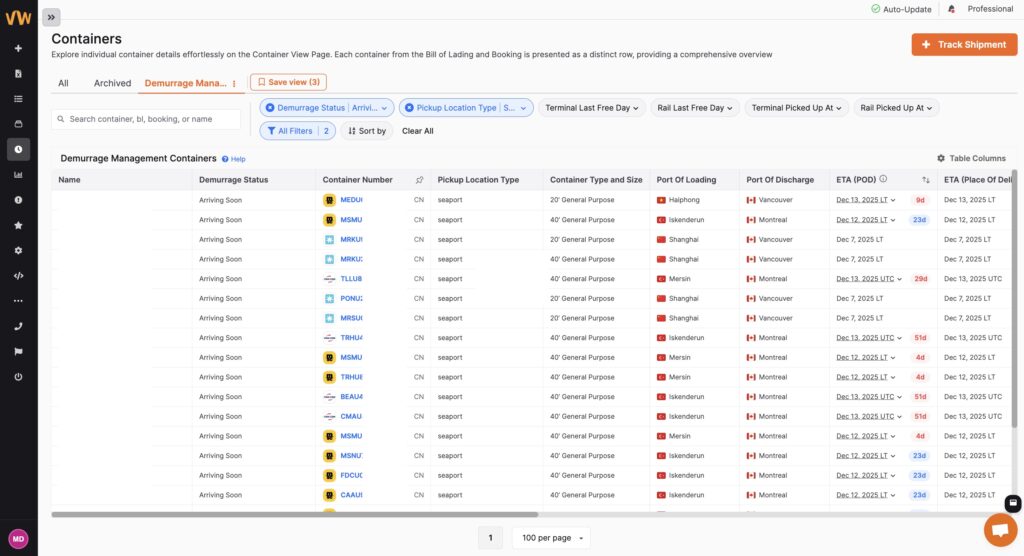
Stop asking, "Where is my container?" and start asking, "Is my container ready?"With Visiwise, you can filter your dashboard to show only containers arriving in the next 7 days. From there, you can instantly see which ones have Holds or Missing Releases, allowing you to confirm appointments and warehouse space now, not later.
The Bottom Line
You cannot control port congestion. You cannot control labor strikes. But you can control your documentation, your appointments, and your warehouse planning.
If you shift your workflow 5 days to the left, demurrage stops being a crisis and becomes a rare exception.
Don’t let the arrival notification be your alarm clock. Let Visiwise wake you up while you still have time to hit snooze.
And remember… do not forget a good cup of coffee. ☕️