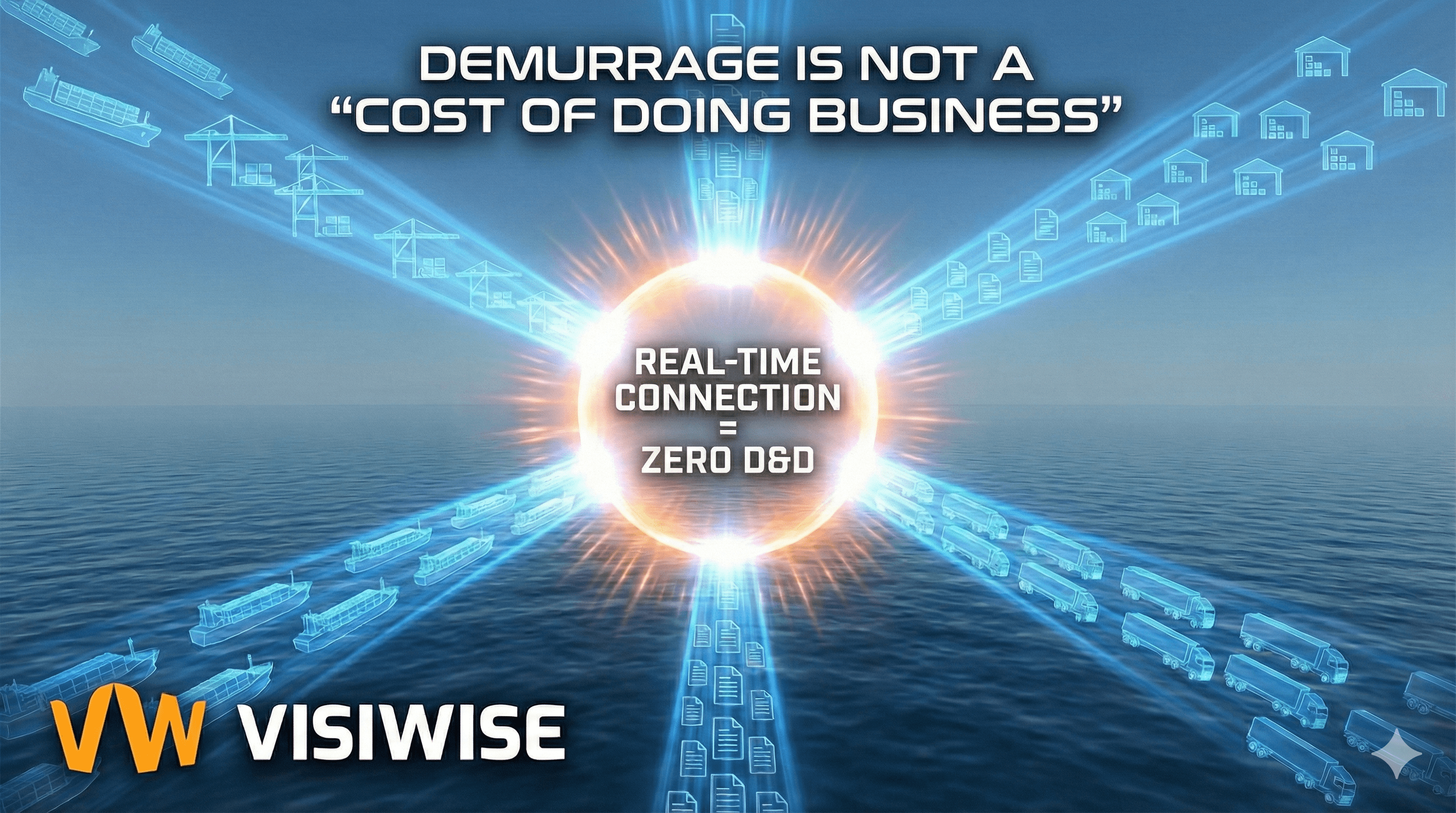
It’s a penalty for disconnected data. Here is how to fix it.
If you look at the cost of shipping of almost any major import business, you’ll find a line item that drives me crazy. It’s usually labeled "Demurrage & Detention," but it might as well be labeled "Money We Set on Fire."
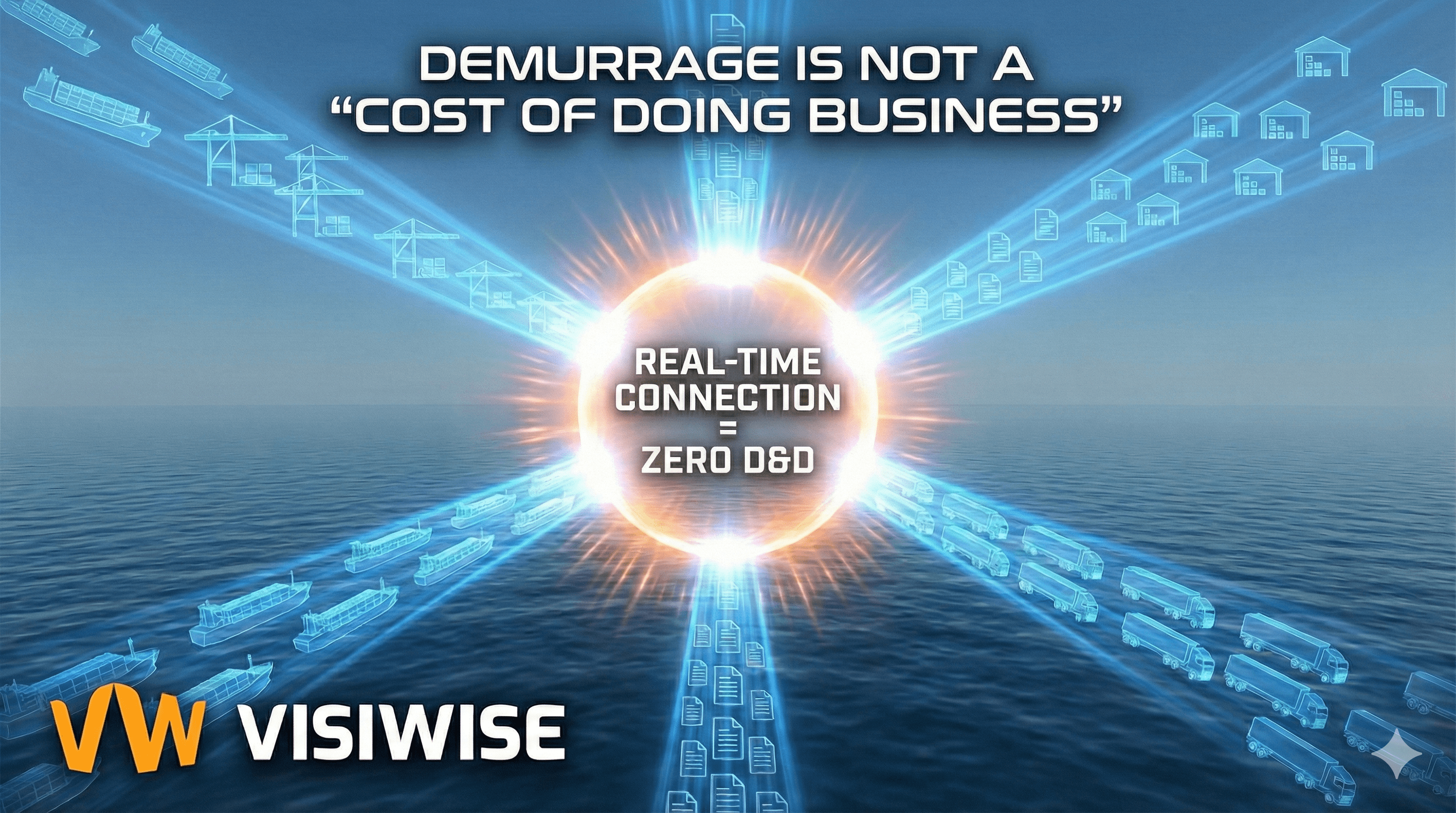
For too long, supply chain leaders have accepted demurrage as a necessary evil—a "cost of doing business" just like ocean freight or customs duties.
I’m here to tell you that’s a lie.
Ocean freight is the cost of moving goods. Duty is the cost of importing goods. Demurrage is the cost of not disconnected and outdated data.
It is a penalty for bad data and disconnected teams. And unlike ocean freight, it is 100% optional.
The Anatomy of a “Disconnect”
Demurrage rarely happens because a truck broke down. It happens because of a disconnect in information that occurred 5 days before the ship even docked.
Let’s look at a typical "Disconnect Scenario" that costs companies thousands:
- The Vessel skips a congested port
- The Carrier changes the Vessel ETA from Oct 5th to Oct 1st.
- The Broker doesn’t see the update and doesn’t file the entry for the 1st.
- The Result: By the time the confusion is cleared up, the container has been sitting on the terminal for 4 days. You are now paying daily storage fees.
This wasn’t a logistics failure. It was a visibility failure.
How Visiwise Eliminates the Disconnect
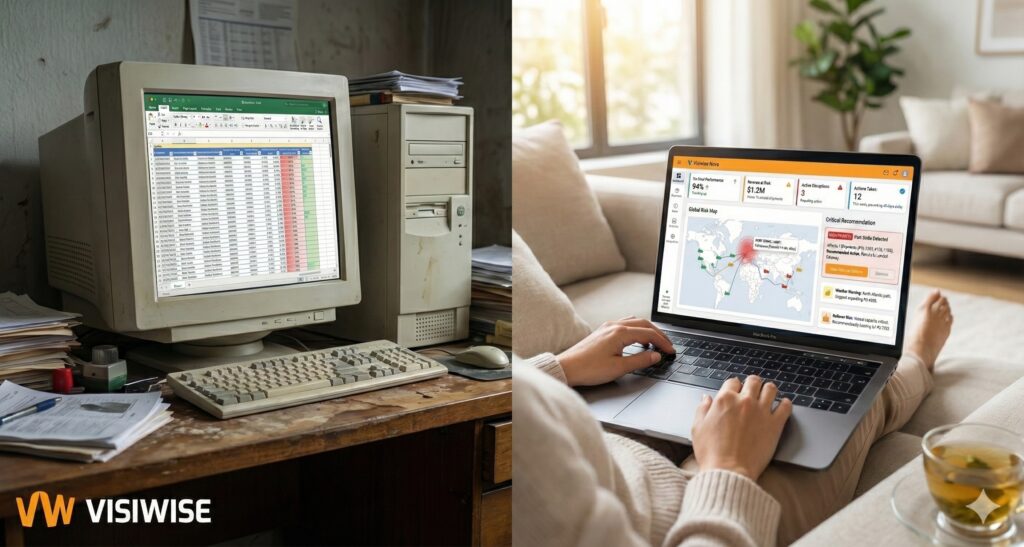
At Visiwise, we built a system that connects these dots automatically.
To give you a true picture of risk, we don’t just track one source. We ingest and fuse real-time data from Terminals, Ports, Vessel AIS satellites, Steamship Lines, and Rail networks.
But external data isn’t enough. That is why we also integrate your commercial files and documents directly into the platform.By combining the live logistics data with your internal documentation, we don’t just show you where the container is; we act as a "Co-Pilot" that flags risks before they become invoices.
Here is what that looks like in practice.
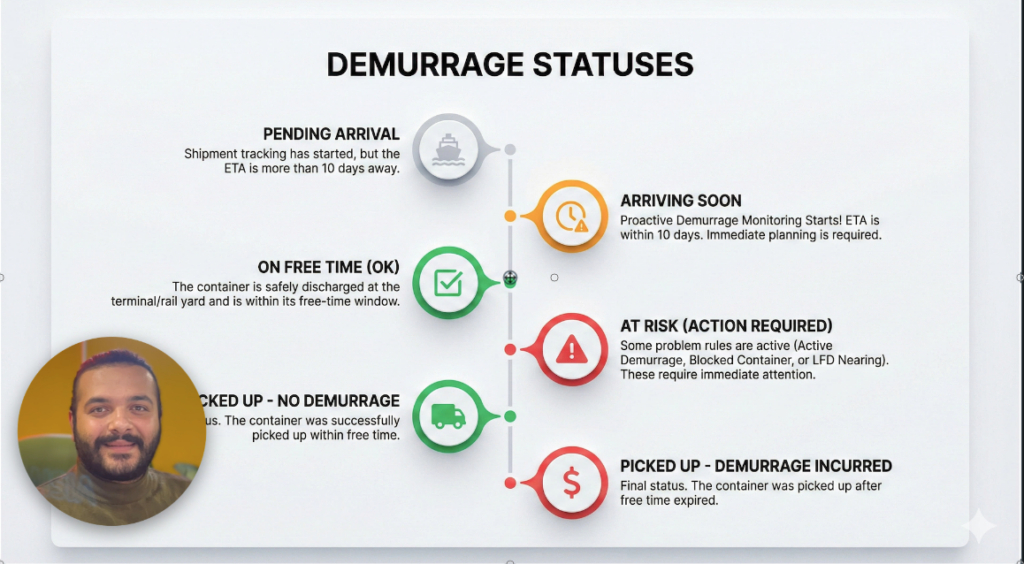
1. The “At Risk” Dashboard
Most tracking tools give you a list of 200 containers. That’s not helpful; that’s noise. You don’t need to worry about the demurrage of the 190 containers that are in-transit and sailing. You need to know about the 10 that are about to arrive and to cost you money for any late action.
Visiwise filters the noise to show you only the exceptions.

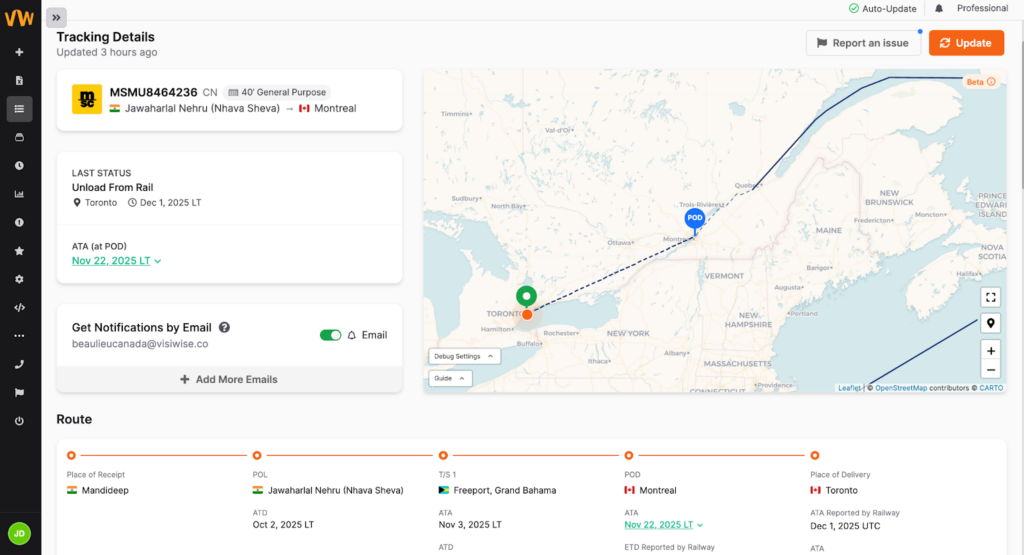
2. The “Greenlight” for Pickup
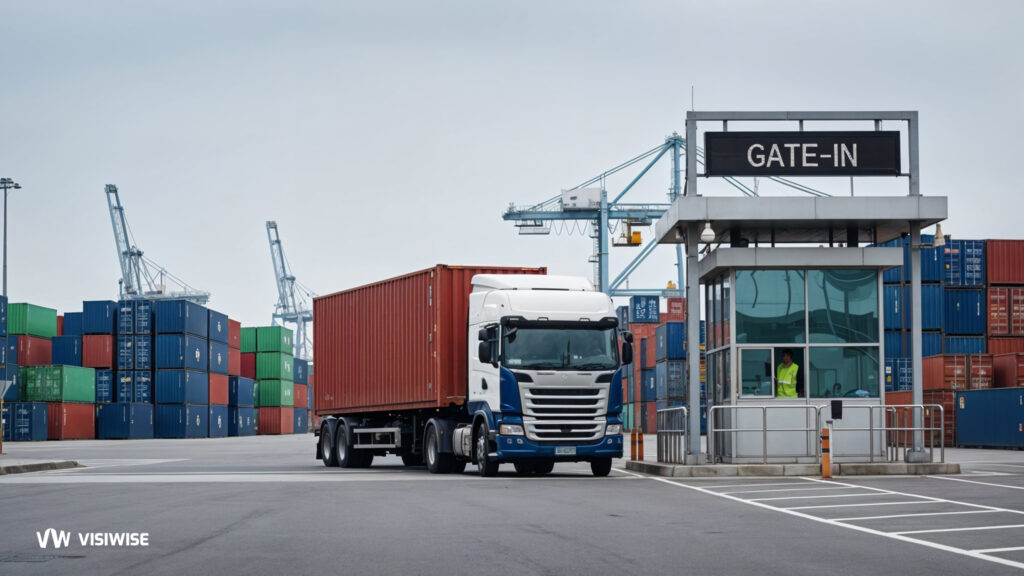
How do you know when to send a truck? If you send it too early, you pay a "dry run" fee. If you send it too late, you pay demurrage.
You need a single source of truth that confirms the container is discharged, cleared, and released. Combining the real time data from vessel status and location using AIS data, shipping line tracking data, terminals real-time data, we track the not only the container status but also the "availability status” as well as the "Last Free Day" (LFD) countdown live, so you never have to guess.
3. Proactive Alerts (The Time Machine)
If you are logging into a portal to check for problems, it’s already too late. You need the issue to come to you before it becomes a problem.
Visiwise monitors your shipments 24/7. If any risk is detected for demurrage for any of these containers it will send you a notification immediately, not when the container is discharged, or even worse when the demurrage is occurring. This gives you the most valuable asset in logistics: Time.

The “Zero Demurrage” Challenge
I talk to import managers every week who have accepted that spending $5,000 a month on demurrage is just "normal."
It is not normal.
We have customers who move hundreds of containers each month and pay $0 in demurrage. They didn’t get there by working harder. They got there by fixing their data.If you are ready to stop budgeting for waste and start eliminating it, let’s have a conversation.