
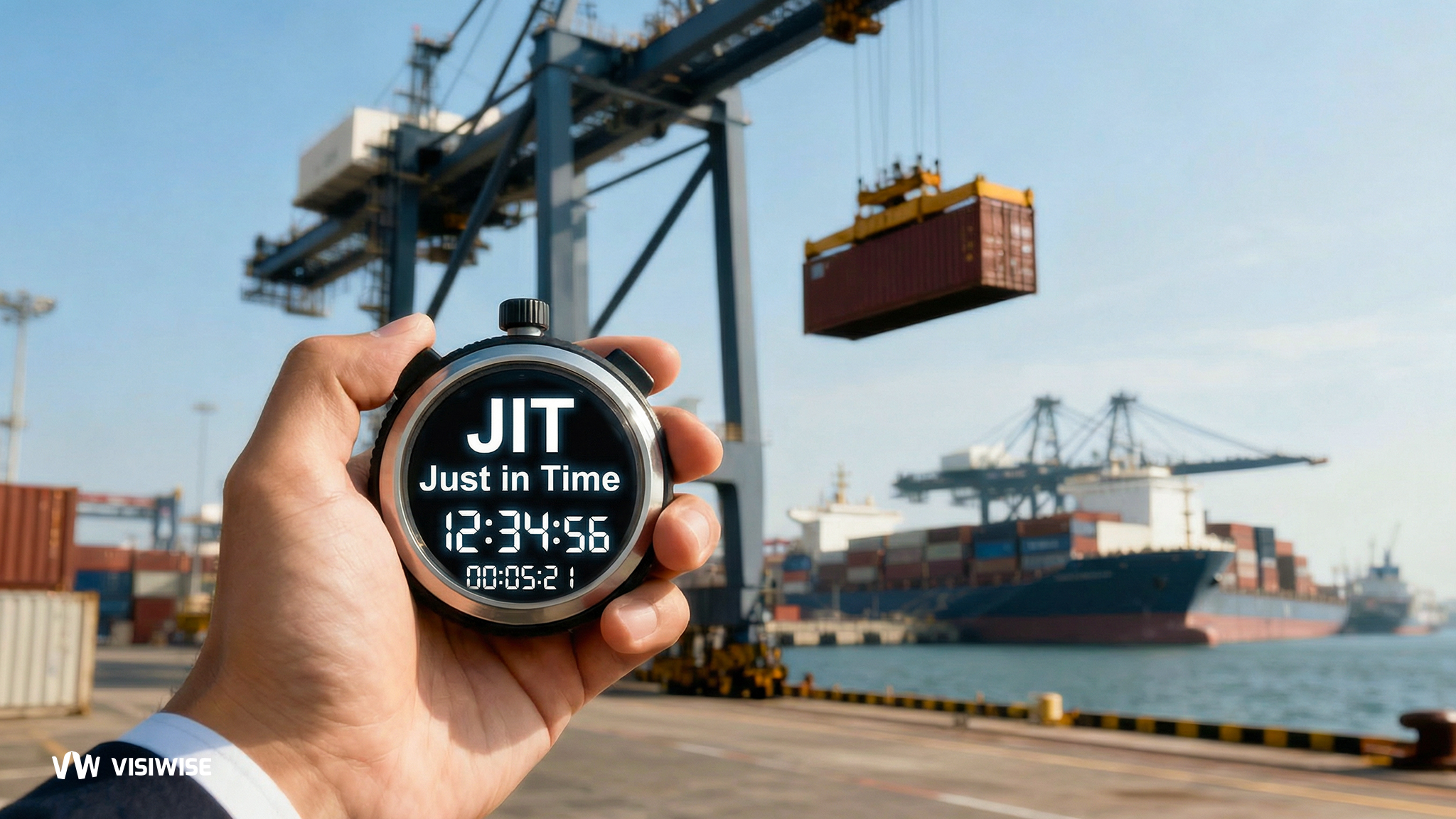
JIT production is a philosophy of eliminating all forms of waste within the production process, from purchase of the materials and components to distribution of the final product. Production using the principles of JIT aims to produce high quality products in large quantities, which customers need within a certain time. This means that JIT manufacturing should be for specific customer orders only and goods are delivered once they are needed. JIT approach requires production of high-quality products in order to reduce and eliminate storage of parts and thus lowering the overall cost of production.
Philosophy and Basis of JIT
The basis and philosophy of the JIT system means production of the goods, which are needed so that the storage of stock would not add value to the production process. A philosophy of JIT production is to supply only a specific product in order to eliminate wasted material and time” (Sliva, 2004).
Lean Production and Customer Orientation
JIT is a lean production of the high-quality components. JIT production supplies the products needed after the customer had placed an order and therefore eliminates all wasteful processes at all stages of production. It means producing and delivering components and goods ‘just in time’. JIT philosophy shows how to increase competitiveness of the company in the market, and contains all the areas in and out of the company.
Inventory Management and Demand Fulfillment
It is about fulfilling customers’ demands for the particular material in production or final product in the distribution chain. Also it includes meeting agreed strict deadlines of inventories “in the right time according to the customer’s needs.” JIT is a production philosophy of management inventories in the company. Its aim is to provide reduction of wasted stock. The key of JIT is the idea to eliminate any losses. This philosophy is in conflict with the traditional philosophy “just in case (JIC)”, according to which a company stores big inventories in case they are needed.
Push versus Pull Production Systems
The traditional producers in manufacturing “push through” the final product. This is not permitted in JIT manufacturing. According to JIT, it is considered to have a negative impact on society. On the contrary, JIT philosophy promotes the principle of ‘pulled through’ production and finished goods, ‘just in time’ to be sold.
JIT as a Logistics System
JIT system is the most widespread logistics technology in the field of supply, production and distribution. It satisfies the requirements of delivery of the particular materials, parts and components in the production or distribution of finished products (goods) by delivering them “just in time”. It means that these goods are delivered accurately and by the deadlines according to the specific need of the customer. This system approach requires very frequent supplies of partly finished components ‘just in time’ to the customer. Therefore, the customer is a dominating article of the supply chain.
Role of Suppliers in JIT
The suppliers have to adapt in such a way that they create parts that will smoothly pass through all points of the handling operations at the production line.
Objectives of JIT Strategy
The aim of JIT strategy is to create a product as fast as possible by simplifying and rationalization of internal and external data flow in logistics and thus cutting the costs of the production process. It is important that the high quality supply chain is synchronized with production and thus delivers required materials. JIT goal is to reduce the amount of warehouses. This concept focuses on sophisticated planning, quality detection, designing efficient warehouses and stock supply.
Waste Reduction and Time Efficiency
The JIT method is used as a tool to reduce the storage of parts and early supply of the plant. The plants, using this method, concentrate particularly on the reduction of wasted time. The objective is to be closer to the customer and to react faster according to the changes and needs.
Implementation of JIT in Logistics Chain
The main implementation of JIT to the logistics chain includes choosing corresponding methods of production management, defining the lines of management of the sector, defining production with JIT manage, defining goals, creating steering group, shortening the interim times, consolidating jobs in the lines or in groups, customizing management parameters, reducing waiting times, eliminating downtime, reducing setting times, increasing flexibility, reducing amount of production, waste reduction, reducing variable costs, maintaining balance of the activities, increasing consumption, collaboration between plants, adapting to demands, high quality products, reducing faulty products, increasing production, increasing productivity, increasing reliability of the products, maintaining efficiency of the manufacturing park, increasing effectiveness and reliability of the tools and machinery, reducing faults resulting in production shutdown, creating, designing, adapting to work changes, and motivating.
Advantages of JIT Manufacturing
Advantage of JIT manufacturing is the shortening of the entire production (consumer) cycle. Time, during the whole cycle, causes acceleration of capital turnover, increases performance and flexibility and satisfies the consumer.
Risks and Limitations of Inventory Reduction
Suppliers located closer to the production plant (place of consumption) do not bring any benefits to the supply chain because the transfer of the costs spent on stocks goes back to the distribution channel. If the rapid reduction of stocks is not simultaneously accompanied by the saving of time in the production process, it may cause a serious threat to the plant.
Supplier Strategies within JIT
To adapt to the needs of customers, the suppliers currently use synchronized strategies within JIT system, when there is only minimal safety stock for the case of unexpected delay of transport or emancipation strategies, when the plant produces several supplies to the store, from where they are dispatched according to customer needs in JIT mode.
Logistics Constraints and Solutions
The advantage of this system is the propinquity of the supplier and the customer. On the contrary, this strategy may be limited in case of a short transfer distance, border controls and freight forwarding equipage, in case of not complex composite assortment, in-adaptable structures of suppliers production or unsolved problem of connection in the material flow or in information flows.
Role of Freight Forwarders
The first four above mentioned factors may be eliminated by accepting of emancipation strategy in the form of inserted common warehouse operated by a contractual freight forwarding agency. In this case, it also ensures the receiving of supplies sent by the supplier to the warehouse on the basis of appeal to the customer. Moreover, this warehouse also provides information services and handles formalities connected with supply transport. If several suppliers are involved in the subsystem of transit storage supplies, the freight forwarder also performs completion or compilation of items within the supply from the warehouse, according to the order required by the customer.
Fields of JIT System Operation
In general, it is possible to say that JIT system operates in four basic fields: improvement of stocks turnover, better customer service, reduction of storage area, and improvement of response time.
Business Impact of JIT Introduction
Impact of the introduction goes into business includes increased productivity, reduction of purchase prices, reduction in manufacturing inventories, reduction in finished inventories, waste reduction, reduction of time required for handling and transportation, reduction of service processes, saving production and storage areas, and improving quality.
Transport Requirements in JIT
The implementation of a JIT system may also cause the decrease of distribution costs, decrease of costs on transport, improvement of products quality from the suppliers and reduction of number of carrier haulers and suppliers. Within the JIT system, the importance of transport as a segment of logistics increases and high requirements are put on it.
Possible Negatives of JIT
However, JIT has also some possible negatives. An emphasis on creating the best conditions for smooth production with minimal stocks may mean deterioration in conditions for the customer and limitations of the sub-suppliers. Similarly, a JIT system makes high demand on the organization of transport process.
Legal Aspects of Supplier Contracts
A contract with the supplier about the delivery or deliveries of materials is a final stage of the management processes of purchase strategy of the plant. In the case of determining quantity and value volumes of the material, the plant enters into long-term contracts with the suppliers.
Advantages of Long–Term Contracts
Another advantage of long-term contracts is quantity rebates. For the supplier, they are a subject of demonstration of withdrawal stability of products produced by it.
Contractual Requirements in JIT
The following aspects are subjects of the contracts: specification of materials and their qualitative parameters, specification of initial raw materials and materials, manipulation with tools, devices and forms, plan of formation of stock reserves and plan of supplies, duration of contract validity and notice periods, prices, and contractual penalties for not meeting of contractual terms and conditions.
Planning Levels in JIT Contracts
If the customer concludes a contract with the supplier about the JIT form of supply, then the contractual relations are legally modified to three planning levels: strategic level, medium-term level, and short-term level. The transmission of information is especially difficult in the last level. It is necessary to use phones, faxes and e-mail.
Conclusion
It is very difficult to implement a JIT system, because it requires significant costs to ensure effective operation of the entire system. The most important benefits of the system occur only after a certain time of its operation. The process of material system includes a sub-system of material availability, material

 Logistics Systems: Principles, Supply Chain Integration, and Operational Impacts</strong>)
 Logistics Systems: Principles, Supply Chain Integration, and Operational Impacts</strong>&description=&image=https://www.visiwise.co/blog/wp-content/uploads/2026/01/Just-In-Time-JIT-1024x576.jpg)