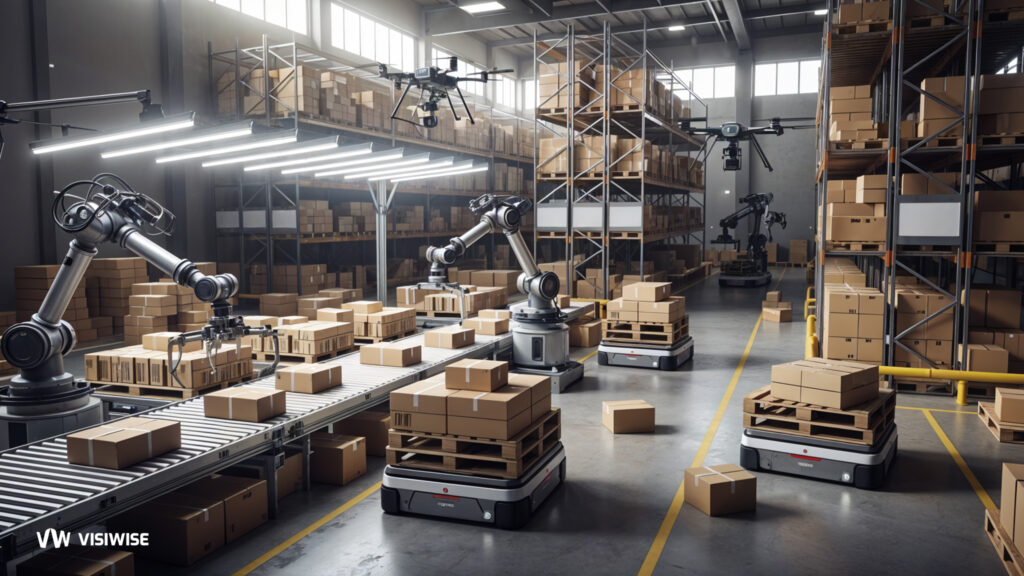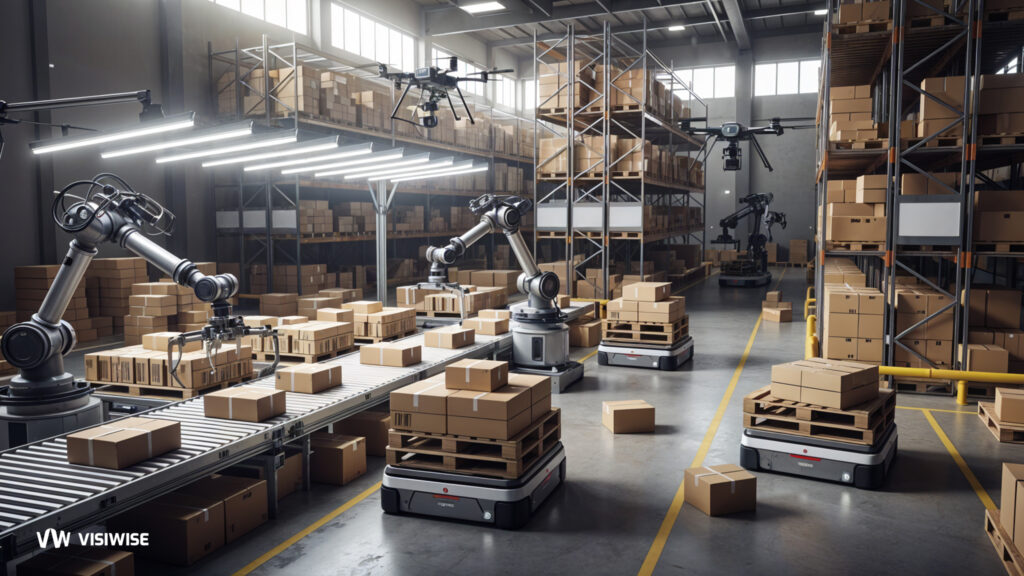
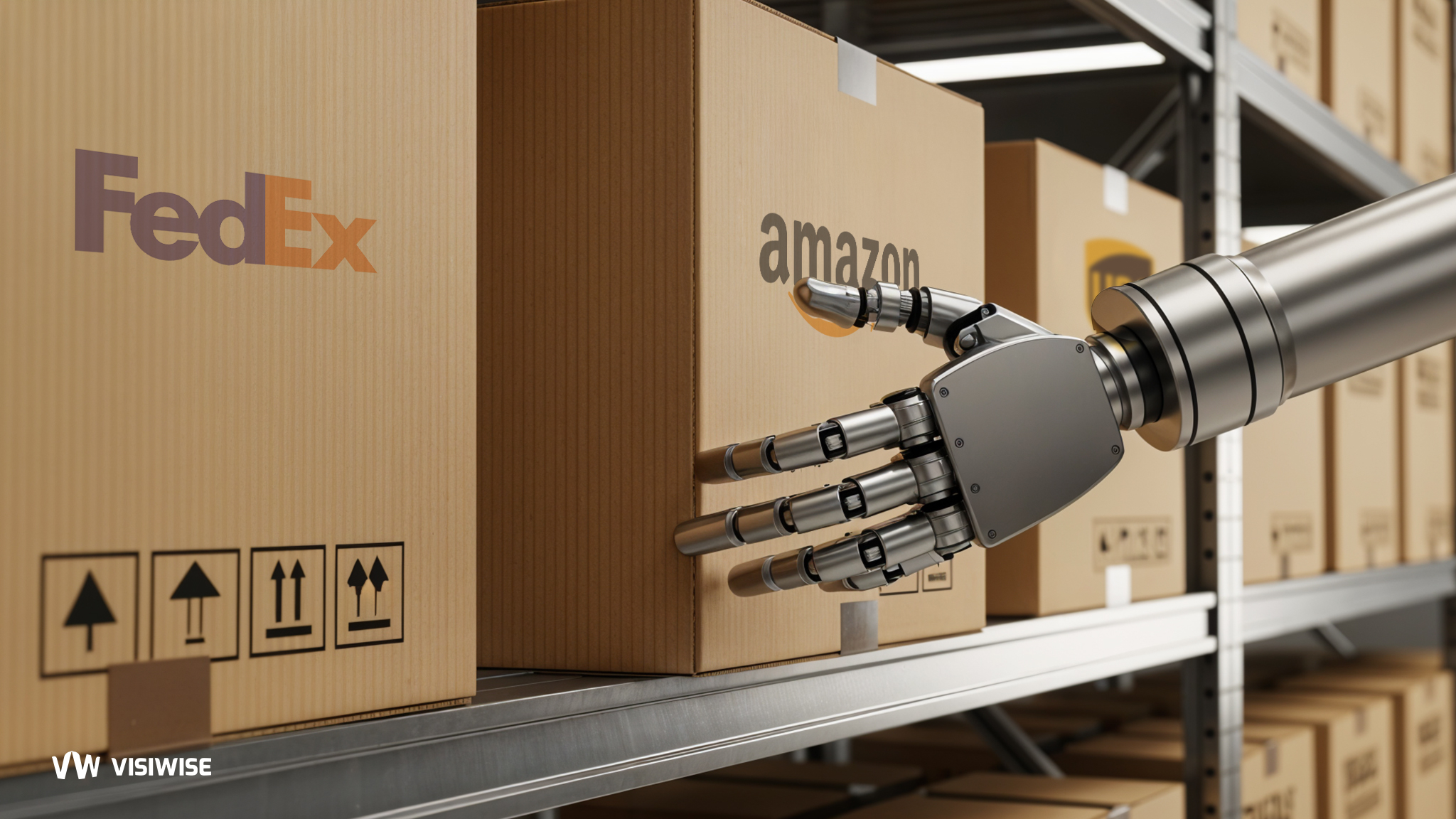
AI solutions in supply chain are a game-changer for forward-thinking businesses, with broad applications that can transform how products are sourced, manufactured, and delivered.
Picture a world where warehouses regulate stock levels automatically in line with demand. Where shipments can be rerouted in real-time based on changes in weather or traffic. Where suppliers can be vetted, assessed for risk, and onboarded in a matter of seconds.
These use cases would have seemed like science fiction a decade ago. But today, AI is turning supply chain management into an interconnected, smart, automated process. No wonder the AI supply chain market is set to boom in the coming years, reaching over $157 billion by 2033, with a CAGR of 42%.
As the trusted AI development partner to businesses worldwide, we’ve seen firsthand the transformative impact AI solutions are having on virtually all aspects of supply chain management.
In this article, we’ll explore some real-world examples of companies successfully using AI in their supply chains to deliver operational efficiency at scale.
10 Examples of Leading Companies Using AI Across the Supply Chain
One of the reasons AI is such a transformative technology is its adaptability. It’s not the equivalent of a digital hammer, but rather a versatile toolkit that’s capable of learning, evolving, and improving. As such, it can be applied to an ever-increasing range of business tasks and processes — and the supply chain is no different.
The use of AI in supply chain management isn’t just a gimmick. According to a McKinsey report, AI-driven forecasting can reduce supply chain errors by up to 50%. And that’s just scratching the surface.
Below, we’ll look at 13 examples of companies successfully using AI in their supply chains. These use cases highlight the broad applications of AI for supply chain performance and optimization.
1. Amazon — Smarter Demand Prediction at Scale
Demand forecasting is one of the most powerful examples of AI in supply chain. It enables businesses to leverage ML algorithms that analyze customer data, market trends, and other external factors that might impact sales of certain products. The algorithm then provides accurate forecasts for future demand.
Amazon, the world’s largest retailer, uses AI-driven demand forecasting to ensure that warehouse stock levels are optimized to meet future spikes or dips in product popularity. It achieves this across more than 400 million products with minimal human input. Amazon also uses AI to automatically reorder products that are low in stock or in high demand.
2. Walmart — Real-Time Routing Intelligence
Walmart has been a pioneer in retail AI adoption for years. In addition to offering AI-powered product recommendations, the retail giant has developed a proprietary AI/ML logistics solution called Route Optimization. The software optimizes driving routes in real time, maximizes packing space, and reduces miles driven to a minimum.
In addition to using this technology itself, Walmart has made it available to other businesses. Using Route Optimization, Walmart has been able to eliminate 30 million driver miles from its routes, saving 94 million pounds of CO2 in the process.
3. GXO — Speeding Up Inventory Audits with Automation
When coupled with computer vision, AI-powered software can transform inventory counts from a laborious, resource-heavy process to a rapid, automated one. Businesses are now able to deploy AI tools armed with cameras and sensors to take snapshots of goods. AI algorithms then analyze the data to confirm whether the physical stock corresponds with the recorded stock.
Logistics provider GXO was one of the first companies to implement AI-powered inventory counting. Its system can scan up to 10,000 pallets per hour, generating real-time inventory counts and insights.
4. JD Logistics — Intelligent Warehouse Layout Optimization
In addition to counting inventory, AI solutions in supply chain enable businesses to optimize warehouse space. ML algorithms analyze the demand for different goods, as well as their dimensions and weights. Using this data, the system then recommends the optimal placement of goods to maximize space and speed up the pick-and-pack process.
For instance, JD Logistics has opened several “self-operating warehouses” that use AI-driven supply chain technology to determine the optimal location for goods. This application of AI in supply chain management has helped JD Logistics increase the number of available storage units from 10,000 to 35,000, boosting operational efficiency by 300%.
5. FIH Mobile — Automated Vision-Based Quality Control
A single damaged or defective product can cause manufacturers all manner of problems down the line. But with modern factories churning out huge numbers of new items, manual quality control checks are unreliable and time-consuming. In fact, poor quality control is estimated to cost businesses as much as 20% of annual sales revenue.
AI is proving a game-changer here. Combining computer vision technologies and AI models, businesses can now inspect products — whether automobiles, smartphones, or semiconductor chips — accurately, rapidly, and at scale. FIH Mobile, for example, has deployed Google’s Visual Inspection AI technology to automate its quality inspection process and improve operational efficiency.
6. Ocado — Robotic Picking Powered by AI
To automate the sorting and packing of products, consumer goods production now relies on AI-driven robotic arms. In fact, Gartner estimates that by the year 2026, commercial robots in the warehouse will be used in more than 75% of large enterprises.
British online-only grocery store Ocado uses AI-driven robotic arms that can accommodate a wide range of food items in real time and pack them according to set patterns with remarkable speed and care. This makes its warehouses extremely efficient; now, a 50-item order is ready in a matter of minutes. Meanwhile, warehouse workers are able to move on to roles with greater value and importance compared to their previous tasks.
7. Lineage Logistics — Temperature-Driven Supply Chain Precision
Efficient supply management becomes more difficult if you now also have to store and move perishable items that need to be kept at a specific temperature. That’s where so-called cold-chain optimization can be a game-changer. At Lineage Logistics, for instance, an AI algorithm helps make sure food gets to where its going at the proper temperature. The algorithm predicts when specific orders will arrive at or leave a warehouse. This allows warehouse workers to be prepared by placing pallets accordingly. This application of AI in supply chain has helped Lineage Logistics improve operational efficiency by 20%.
8. FedEx — Predictive Tracking for Faster Deliveries
Real-time vehicle tracking is another powerful use of AI in supply chain management. By fitting fleet vehicles with IoT devices and GPS tracking, companies can gain clear visibility into the location of trucks, as well as the temperature and condition of shipments. This data can then be fed into AI systems that provide real-time insights and alerts about traffic conditions and optimal routes.
One of the world’s largest delivery companies, FedEx has been quick to implement AI-powered vehicle tracking. Its FedEx Surround platform provides real-time visibility into its extensive transportation network. It also offers predictive delay alerts, prioritizes critical shipments, and actively intervenes to ensure that shipments get delivered as quickly as possible.
AI helps businesses improve supply chain visibility through smart, digital solutions. For instance, AI worked with a Fortune 500 customer to develop a fleet truck tracking system that captures data through IoT devices and can determine the location of a stolen vehicle. As a result, the client was able to:
• Reduce costs and CO2 emissions by cutting fuel consumption
• Increase productivity through optimized routing
• Prevent fraud through geofencing and real-time mileage and fuel monitoring
9. Microsoft — Forecasting Material Shortages Ahead of Time
The smooth production of goods relies heavily on the availability of raw materials. When raw materials are harder to access, due to environmental or political factors, production can be delayed significantly or even grind to a halt. With predictive AI systems, companies can forecast shortages years in advance — and put plans in place to avoid costly bottlenecks.
Microsoft, for example, has integrated their Copilot AI system into its Dynamics 365 Supply Chain Management platform. This gives businesses the ability to implement AI-powered material resource planning (MRP) that responds to demand and other external factors in real time.
10. Maersk — Scaling Supplier Negotiations with AI
Logistics firms often partner with thousands of suppliers and vendors to transport products all over the globe. Manually negotiating supplier contracts can be such a time-consuming task that it makes the process hard to scale. But AI is changing all of that.
Now Maersk, one of the world’s largest shipping companies, is using AI to automate negotiations with suppliers. The logistics behemoth employs a conversational AI chat tool that is supported by natural language processing (NLP), generative AI and data analytics to engage in negotiations as if it were human. As such, Maersk can sign deals faster and at scale.
AI in Supply Chain — Summary Table
| Company | AI Use Case | Description (Article Words) | Impact |
| Amazon | Demand Prediction | Uses ML to analyze data and optimize stock for 400M+ products; automatically reorders low-stock items. | Accurate forecasts; optimized inventory. |
| Walmart | Route Optimization | AI/ML software optimizes driving routes, packing space, and reduces miles. | 30M miles eliminated; 94M lbs CO₂ saved. |
| GXO | Inventory Audits | AI + cameras scan goods and confirm stock accuracy; scans 10,000 pallets/hour. | Real-time counts and insights. |
| JD Logistics | Warehouse Layout | AI recommends optimal placement of goods in “self-operating warehouses.” | Storage 10k → 35k; efficiency +300%. |
| FIH Mobile | Quality Control | Uses Google’s Visual Inspection AI to automate inspection. | Improved operational efficiency. |
| Ocado | Robotic Picking | AI-driven robotic arms pack items in real time; 50-item orders ready in minutes. | Highly efficient warehouses. |
| Lineage Logistics | Cold-Chain Optimization | AI predicts order timing to place pallets at proper temperature zones. | Efficiency improved by 20%. |
| FedEx | Predictive Tracking | IoT + AI provide real-time visibility, predictive delay alerts, critical shipment prioritization. | Faster deliveries; lower costs; fraud prevention. |
| Microsoft | Material Shortage Forecasting | Copilot AI in Dynamics 365 forecasts shortages and adjusts to demand. | Avoids costly bottlenecks. |
| Maersk | Supplier Negotiation | Conversational AI negotiates with suppliers using NLP and analytics. | Faster deals at scale. |
How will AI support the future of supply chains?
AI will revolutionize the development of the modern supply chain as they have become too complicated. AI solutions empower businesses to solve current challenges and find better methods to build durable systems that work better and protect the environment. Here’s the case:
| Benefits | Description |
| Detailed activities tracking | Generative tools predict supply chain hazards by studying existing and recent data. They help organizations prepare responses to unexpected events, from natural disasters to political instability. |
| Complete visibility | The technology stitches together data from IoT devices, ERP systems, and external sources to help businesses track operations across all parts. Much better decisions with a complete supply chain help companies trust each other more, thanks to full information flows. |
| Accurate demand forecasting | AI models use buyer actions, market signals, and outside influences to create exact market predictions. Companies can run their operations efficiently by controlling stock to match customer demands and lower product waste. |
| Autonomous operation | Any AI system automates the key functions of warehouse stock control and source material delivery systems. These systems work independently, adapting to real-time changes to enhance precision and performance. |
| Sustainability improvements | AI detects paths to decrease environmental impact by finding better shipping paths and using less energy while working to buy materials. |
| Better decision-making | AI technology processes huge data collections to create helpful business guidance. These findings enable managers to pick better shipping routes, select dependable suppliers, and manage stock for improved market position. |
| Personalized solutions | Technology modifies operations based on each customer’s needs. Advanced processing systems help businesses deliver specific solutions that build lasting customer relationships. |
| Enhanced collaboration | AI connects all network data to let suppliers and manufacturers communicate faster with their distributors. Organizing and managing all operations in one system makes them more manageable. |
FAQ’s
Can AI predict and prevent supply chain gaps using live data?
AI technology uses current data to detect disruption risks and take action before problems occur. It will let you formulate backup systems to maintain optimal operation performance.
Does AI give businesses visibility into their supply chain?
Robotic systems create full supply chain transparency by tracking shipments, scanning supplier activities, and studying all data inputs throughout the chain. When you see what’s actually happening in the industry, you can make better choices and run processes more efficiently.
Does AI work well for different company sizes?
AI systems help companies of any size achieve better results. Small and medium-sized businesses can use AI regardless of their size. AI providers can offer customized solutions such as demand forecasting and inventory management programs that work for your business needs.
How does AI support sustainability goals?
AI platforms review existing production methods and delivery routes to help you reduce your resources, work with less waste, and use energy more wisely. The technology supports supply chain management by finding sustainable suppliers while lowering the company’s environmental impact.
Which AI tools support predictive supply chain estimation?
AI systems use previous data about sales performance, market patterns, and special dates to estimate what products people want next. The predictions allow you to better control inventory through proper stock amounts that avoid excessive storage and product scarcity.