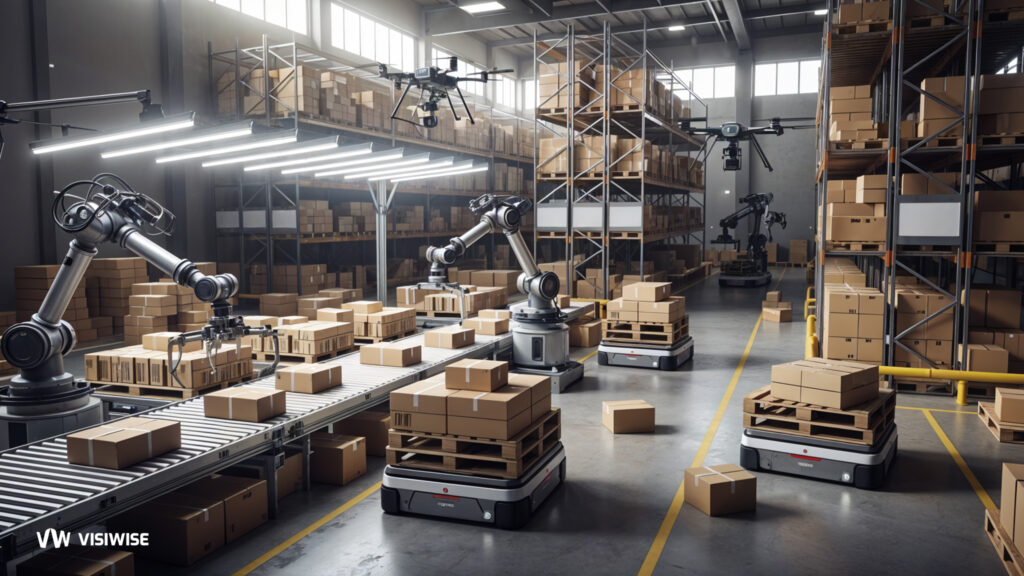
Just-In-Time (JIT) production is a manufacturing philosophy focused on eliminating waste across the entire production process. By producing goods only in response to specific customer demand, JIT reduces excess inventory, lowers storage costs, and improves quality. This approach helps manufacturers deliver the right products at the right time while maintaining efficient, cost-effective operations.
Artificial Intelligence and the Future of Logistic Industry
Artificial intelligence is reshaping logistics and shipping by replacing reactive processes with intelligent, data-driven systems. From warehouse automation and order fulfillment to container shipping and port operations, AI improves visibility, accelerates decision-making, and strengthens resilience across global supply chains. This article explores how AI is driving more predictive and efficient logistics management.
AI in Supply Chain Risk Management: Real-World Examples & Benefits
AI is redefining supply chain risk management by turning reactive processes into predictive, data-driven systems. From supplier risk scoring to real-time disruption alerts, artificial intelligence helps companies anticipate issues before they occur. This article explores real-world examples and key benefits of using AI to build smarter, more resilient supply chains.
Real-Time Shipment Tracking: Why It Matters and How It Compares to Traditional Methods
In this blog post, we will take a detailed look at these two tracking methods, explore their benefits and drawbacks, and help you decide which option is better suited to your business.
Top Challenges Solved by Shipment Visibility Software
In this blog post, we will explore how shipment visibility software is revolutionizing supply chain management by identifying the top challenges that such technology addresses and the potential future developments of shipment visibility software
Essential Features to Consider When Choosing a Shipment Visibility Software
supply chain visibility software can help you stay on top of the operations, reduce risks, and provide quick solutions to potential setbacks. Here are the top features to look for in supply chain visibility software that can help businesses transform their operations.
How Technology is Advancing Real-Time Shipment Tracking
In this blog, we will delve deeper into the definition of real-time shipment tracking and the importance it plays in a fast-paced and ever-evolving shipping industry. We will showcase how real-time shipment tracking is transforming the logistics landscape and explore what the future holds for this exciting technology. Are you ready to join us on this journey? Let’s dive in!
How to Improve Customer Satisfaction with Shipment Visibility Software
One of the most significant benefits of Visiwise Visibility Platform is the ability to improve customer satisfaction. By providing customers access to real-time shipment information, businesses can adjust to changing circumstances and prevent customer dissatisfaction.
How to Pick a Visibility Platform for Your Supply Chain
As supply chains become more complex, lack of visibility and transparency can lead to decreased productivity, increased costs, and damage to a company’s reputation
Shipping Surcharges
Are you struggling to maintain your profit margins due to rising shipping costs? You’re not alone! Shipping surcharges are a leading contributor to increasing shipping expenses, making it challenging for merchants to keep their costs down.
An Ultimate Guide on How to Track Shipments Nowadays
Are you struggling with tracking your ocean shipments and finding it challenging to navigate through multiple carrier websites to get a status update? Look no further! This article will guide you through an ultimate step-by-step process for tracking ocean shipments with Visiwise Dashboard.
The History of the Shipping Container
Shipping containers have revolutionized global trade, and their history is worth exploring. Prior to the introduction of shipping containers, goods had to be laboriously packed and manually loaded into the holds of ships, a process that was both time-consuming and inefficient